Security by Design for Fast-Moving Engineering Teams
Delivering software quickly should not mean discovering security problems after deployment. Modern engineering teams need a practical way to identify architectural risks early without introducing lengthy security reviews. That is where lightweight threat modeling becomes valuable.
Delivering software quickly should not mean discovering security problems after deployment. Modern engineering teams need a practical way to identify architectural risks early without introducing lengthy security reviews. That is where lightweight threat modeling becomes valuable.
Most engineering teams do not ignore security because they believe it is unimportant. They struggle because traditional security processes often feel disconnected from how modern software is built.
Today, development teams release code continuously, deploy infrastructure through automation, and build applications from dozens of managed cloud services. Waiting until the end of a project to perform a security review no longer works. By the time vulnerabilities are discovered, architecture decisions are already embedded in the system, making changes expensive and disruptive.
Security by design addresses this challenge by bringing security discussions into architecture and development instead of treating them as a final checkpoint. Threat modeling is one of the most effective ways to make that happen because it encourages engineers to ask the right questions before writing code.
The objective is not to predict every possible attack. It is to understand where the system is exposed, what matters most, and how risks can be reduced through better design decisions.
1. Why security by design matters for modern engineering teams
Every software system has assets worth protecting. Customer information, authentication services, APIs, databases, cloud infrastructure, and deployment pipelines all represent potential targets if security is overlooked during design.
The challenge is that architecture decisions often determine security long before implementation begins.
For example, choosing how services authenticate with each other influences authorization, secrets management, and network boundaries. Deciding where sensitive information is stored affects encryption, compliance, and access control. These decisions become increasingly difficult to change once development is underway.
Security by design encourages engineering teams to evaluate these risks during architecture discussions rather than after deployment. This approach helps identify weaknesses when they are still inexpensive to address.
It also changes how security is viewed across the organization. Instead of relying solely on security specialists to identify problems, architects, developers, DevOps engineers, and platform teams all contribute to building secure systems from the beginning.
This shared responsibility improves collaboration and reduces the number of security issues discovered during later stages of development.
2. Why traditional threat modeling slows engineering teams
Threat modeling has existed for many years, but many engineering teams still avoid it.
The reason is not the concept itself. It is how the process has traditionally been implemented.
Large security workshops, lengthy documentation, and extensive review cycles may work for projects that release software a few times each year. They become difficult to maintain when applications are updated several times each week.
Documentation quickly becomes outdated. Architecture diagrams no longer reflect production environments. Developers begin viewing threat modeling as another compliance exercise instead of an engineering activity.
Security reviews also tend to occur too late.
By the time the security team evaluates a completed feature, major architectural decisions have already been made. Addressing identified risks may require redesigning APIs, changing authentication mechanisms, or restructuring service communication. These changes delay releases and increase engineering effort.
Modern software delivery requires a different approach.
Threat modeling should become a lightweight design discussion that evolves alongside the architecture instead of a large document created once and forgotten.
| Traditional threat modeling | Lightweight threat modeling |
| Large upfront workshops | Short architecture discussions |
| Security owned by specialists | Shared engineering responsibility |
| Extensive documentation | Simple diagrams and design notes |
| Performed before major releases | Integrated into every development cycle |
| Difficult to maintain | Easy to update as systems evolve |
The objective is not to eliminate documentation. It is to make security reviews practical enough that engineering teams actually use them.
3. What security by design actually means
Security by design is often misunderstood as adding more security controls to an application.
It is actually an engineering mindset.
Instead of asking, How do we secure this feature after it is built?, engineering teams ask a different question:
How can we design this feature so common security risks are less likely to exist in the first place?
This mindset influences every architectural decision.
Authentication is planned before APIs are exposed.
Authorization is considered before new services are created.
Sensitive data is classified before storage solutions are selected.
Network trust boundaries are identified before infrastructure is provisioned.
These discussions rarely require extensive documentation. Most can be completed during architecture reviews or sprint planning sessions, provided the right people participate.
Security by design also encourages teams to adopt secure defaults.
Examples include:
- encrypting sensitive data by default
- enforcing least-privilege access
- validating inputs consistently
- protecting secrets through managed services instead of configuration files
- enabling logging and audit trails from the beginning
None of these practices significantly slow development. They reduce the likelihood of expensive redesign work later in the project.
4. A lightweight threat modeling workflow
Threat modeling does not need to become a separate project.
For most engineering teams, it works best as a short design exercise performed whenever significant architectural changes are introduced.
The discussion begins with understanding what the system is expected to do before considering how it might fail.
A lightweight workflow typically follows these stages.
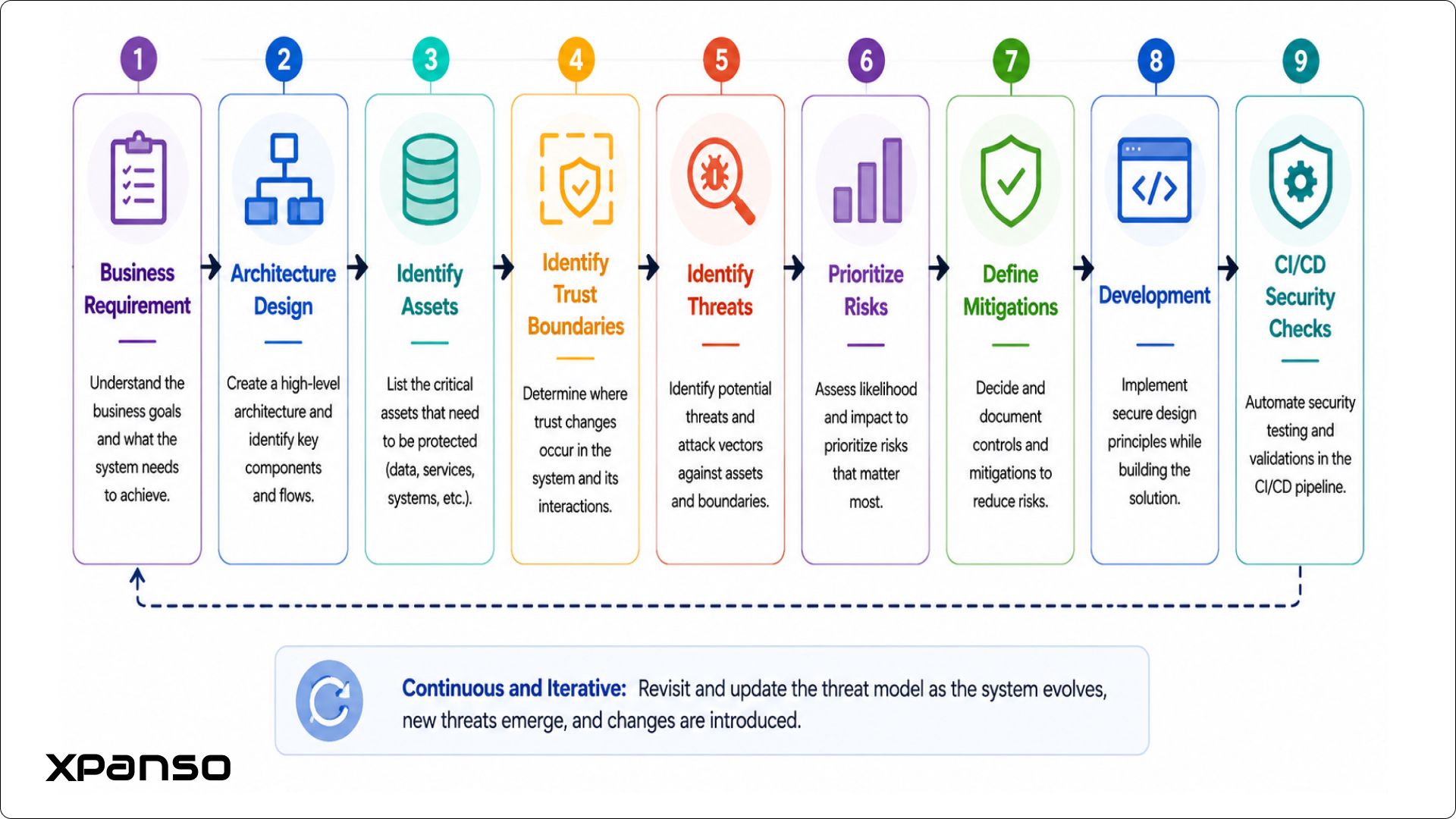
Figure 1: Lightweight threat modeling workflow from asset identification to security mitigation.
The first step is identifying the assets that require protection. These may include customer information, authentication services, payment systems, APIs, or deployment infrastructure.
Next, engineers identify trust boundaries. Every point where information crosses between users, applications, cloud services, or external systems represents a potential security boundary.
Only after these boundaries are understood should the team discuss possible threats. Rather than attempting to document every attack scenario, the goal is to identify realistic risks that could affect the architecture being designed.
Finally, the team agrees on practical mitigations before implementation begins. These decisions may include stronger authentication, network segmentation, additional monitoring, encryption, or changes to service communication.
A discussion like this often takes less than an hour, yet it can prevent architectural weaknesses that would otherwise remain undiscovered until much later in the development lifecycle.
5. Threat modeling across cloud-native architectures
Cloud-native architectures introduce flexibility, scalability, and faster deployments. They also introduce new security boundaries that traditional applications rarely encounter. Microservices, managed cloud services, containers, serverless functions, and third-party APIs all communicate across distributed environments, increasing the number of interactions that engineering teams must understand.
Threat modeling helps teams visualize these interactions before they become production issues.
Rather than reviewing every individual service in isolation, engineers should evaluate how requests move through the system, where trust boundaries exist, and which components require stronger protection.
A simplified cloud-native architecture might look like this.
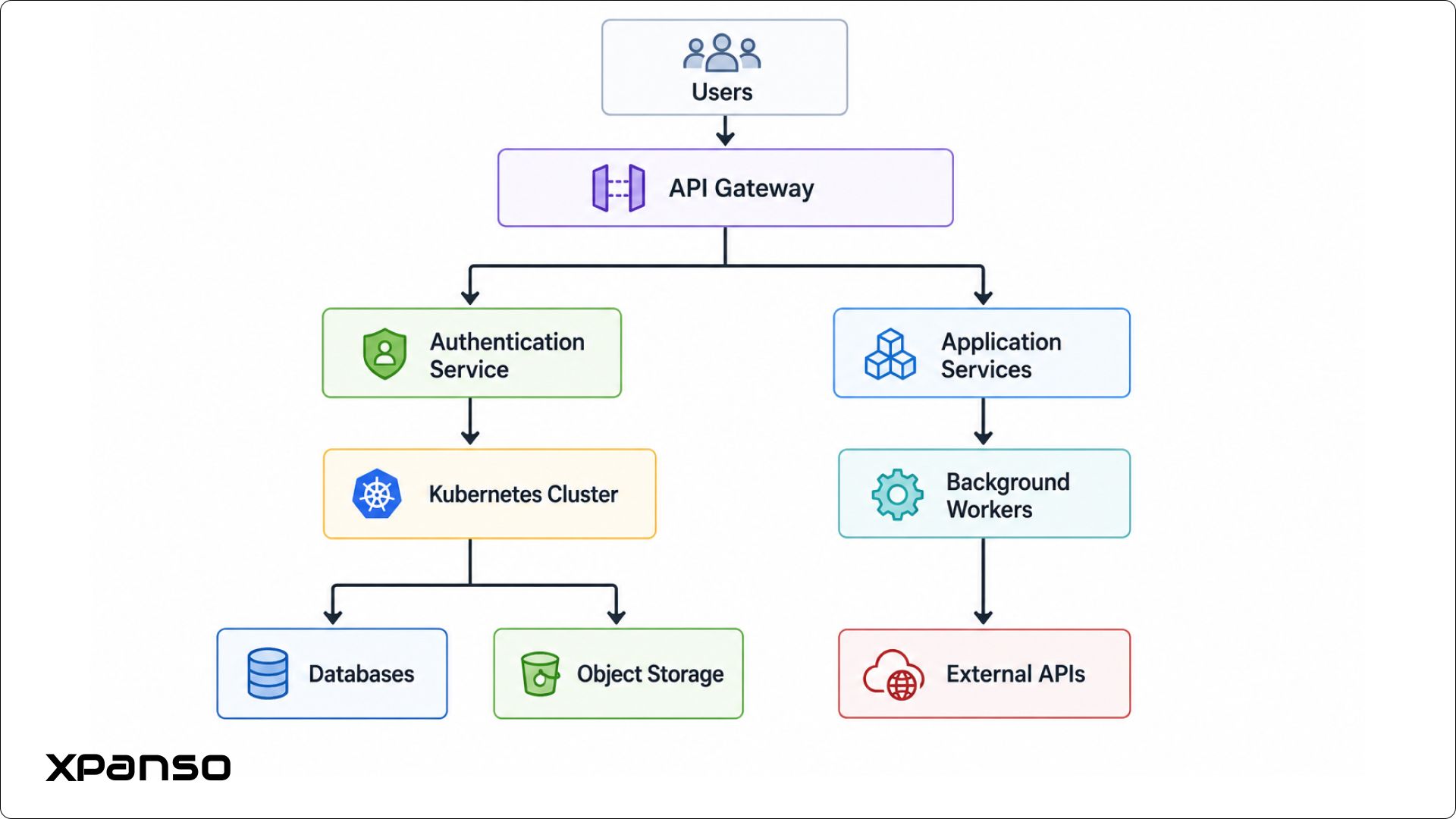 Figure 1: Cloud-native architecture showing key interactions and security trust boundaries.
Each connection in this architecture represents a point where authentication, authorization, encryption, or validation should be considered.
Microservices increase trust boundaries
Breaking a monolithic application into microservices improves scalability and deployment flexibility, but it also increases communication between services.
Every API call introduces new security considerations. Teams should verify how services authenticate with each other, whether internal APIs enforce authorization, and how service identities are managed. Assuming that internal traffic is automatically trustworthy often creates unnecessary risk.
Threat modeling helps identify where service-to-service communication requires stronger authentication or network segmentation before implementation begins.
Containers and Kubernetes require infrastructure awareness
Containers simplify deployment, but they also introduce infrastructure-specific risks.
Threat modeling should examine how container images are built, where secrets are stored, which workloads require elevated permissions, and how workloads communicate inside the cluster.
Questions worth discussing include:
- Should this workload have direct internet access?
- Are Kubernetes Role-Based Access Control (RBAC) permissions limited to what the service actually needs?
- How are secrets managed across environments?
- Can compromised workloads access other namespaces?
These discussions are easier during architecture planning than after deployment.
Cloud services introduce shared responsibility
Managed databases, object storage, serverless functions, and messaging platforms reduce operational overhead, but they do not eliminate security responsibilities.
Engineering teams should understand which security controls remain their responsibility. Identity and Access Management (IAM), network policies, encryption settings, logging, and resource permissions all influence the application's security posture.
Threat modeling encourages teams to review these responsibilities before services are integrated into production.
6. Common security threats every engineering team should model
Threat modeling is not about documenting every possible attack. It is about identifying the security risks most relevant to the system being designed.
Several threats appear consistently across modern software architectures.
Broken access control
Access control failures remain one of the most common causes of security incidents.
They occur when users or services can access resources beyond their intended permissions. This may result from overly broad IAM roles, missing authorization checks, or assumptions that authenticated users are automatically authorized.
Threat modeling encourages teams to identify who should access each resource before implementation begins.
Sensitive data exposure
Applications frequently process customer information, financial records, internal documents, or authentication tokens.
Threat modeling helps determine where sensitive information is stored, transmitted, logged, or cached. These discussions often reveal opportunities to strengthen encryption, reduce unnecessary data retention, or improve key management.
Insecure APIs
Modern applications depend heavily on APIs.
Without proper authentication, rate limiting, input validation, and authorization, APIs become attractive targets.
Reviewing API interactions during architecture discussions helps identify weak points before interfaces are exposed publicly.
Secrets management
Hardcoded credentials and configuration files remain surprisingly common.
Threat modeling encourages teams to evaluate how secrets are created, stored, rotated, and accessed throughout the application lifecycle. Using managed secret stores and short-lived credentials reduces operational risk.
Software supply chain risks
Applications increasingly rely on open-source libraries, container images, CI/CD pipelines, and third-party services.
Threat modeling should consider how external dependencies are introduced, validated, and updated. Verifying trusted image sources, scanning dependencies, and monitoring software components all contribute to a stronger supply chain.
7. Integrating threat modeling into CI/CD pipelines
Threat modeling should not end once development begins.
Modern delivery pipelines provide opportunities to validate architectural decisions continuously.
Security checks can be integrated into pull requests, infrastructure deployments, container builds, and release pipelines without disrupting delivery.
Examples include:
- infrastructure-as-code scanning before deployment
- dependency vulnerability scanning
- container image scanning
- secret detection
- policy validation
- software composition analysis
Automating these activities allows teams to identify security issues while changes are still small and easy to correct.
Threat modeling provides the architectural context, while CI/CD automation helps ensure those decisions remain effective as the application evolves.
8. Security is everyone's responsibility
Security by design succeeds when it becomes part of everyday engineering work rather than the responsibility of a single security team.
- Architects define secure system boundaries.
- Developers implement authentication, validation, and authorization correctly.
- Platform engineers secure infrastructure and deployment pipelines.
- DevOps engineers automate security controls within CI/CD workflows.
- Security specialists provide guidance, review complex risks, and help improve engineering practices.
This shared ownership allows security decisions to happen continuously instead of waiting for formal review cycles.
Organizations that adopt this approach usually experience fewer late-stage design changes because security discussions occur while the architecture is still evolving.
9. Common mistakes teams make
Even organizations that invest in security sometimes make decisions that reduce the effectiveness of threat modeling.
Treating threat modeling as documentation
Threat modeling is a design activity, not a document. Producing lengthy diagrams that are never updated provides little value. Lightweight models reviewed regularly are far more useful than detailed documents that quickly become outdated.
Waiting until development is complete
Reviewing architecture after implementation often leads to expensive redesign work. Security discussions are most valuable before major design decisions become difficult to change.
Ignoring trust boundaries
Many security issues arise because engineering teams focus on individual components rather than the interactions between them. Data moving between users, APIs, cloud services, and external systems deserves as much attention as the services themselves.
Trying to model every possible attack
Threat modeling should prioritize realistic risks. Attempting to document every theoretical attack consumes time without improving security. Focus on threats that are relevant to the application's architecture and business context.
Never revisiting previous threat models
Applications evolve continuously. New services, integrations, and deployment patterns introduce additional risks over time. Threat models should evolve alongside the architecture instead of remaining static documents.
10. The tradeoff: security versus delivery speed is the wrong debate
Security and delivery speed are often presented as competing priorities.
In practice, they support each other.
Identifying architectural weaknesses during a one-hour design review is significantly less expensive than redesigning authentication, API boundaries, or deployment workflows after production release.
Threat modeling does require engineering time. The objective is not to eliminate that investment but to make it proportional to the complexity and risk of the system being built.
Small, continuous security discussions generally provide greater value than infrequent, large-scale security reviews.
11. The real takeaway
Threat modeling is not about predicting every possible attack.
It is about helping engineering teams ask better questions before implementation begins.
By integrating lightweight threat modeling into architecture reviews, cloud-native development, and CI/CD workflows, organizations can identify design risks earlier, strengthen security decisions, and reduce costly changes later in the software lifecycle.
Security by design works best when it becomes part of everyday engineering practice rather than a separate phase of the project.
If your organization is modernizing applications or building cloud-native platforms, Xpanso helps engineering teams design secure architectures that integrate security into delivery workflows without sacrificing development velocity.